How Market Cycles Change Your Perspective as an Investor
Why Market Cycles Matter
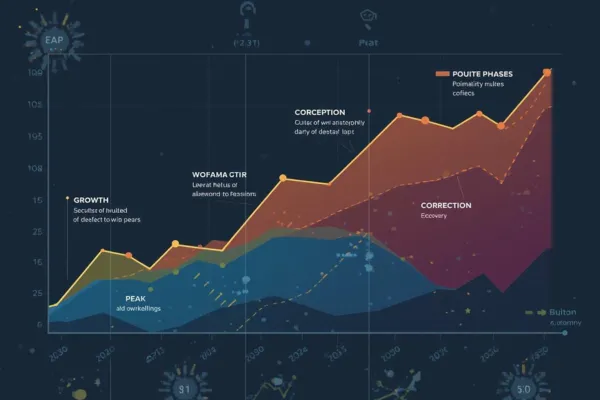
Every investor eventually encounters the same reality. Markets do not move in a straight line. Periods of growth are followed by corrections, consolidation, and recovery. These patterns are often referred to as market cycles.
Understanding these cycles is not simply an academic exercise. They shape investor behaviour, influence risk perception, and often determine whether investors make disciplined decisions or emotional ones.
Historical research from the University of Cambridge Judge Business School highlights that long term market data shows recurring patterns in financial markets over decades, reinforcing the importance of analysing market history rather than focusing solely on short term movements (Cambridge Judge Business School).
For property investors, including those operating in supported living, social housing, and buy to let markets, market cycles influence financing conditions, asset values, tenant demand, and regulatory responses.
Understanding these cycles often transforms how investors view both opportunity and risk.
How Market Cycles Influence Investor Behaviour
One of the most consistent observations across financial markets is that investor behaviour often moves with the cycle itself.
The UK Financial Conduct Authority (FCA) has highlighted that investors frequently behave in a “pro cyclical” way, meaning they tend to increase investment during periods of strong performance and withdraw capital during downturns (Financial Conduct Authority).
In practice this means:
Investors buy assets when prices are high and sentiment is positive
Investors sell assets when markets decline and uncertainty increases
This behaviour can amplify market swings and often results in poorer long term investment outcomes.
Property markets exhibit similar patterns. Rising house prices and strong rental demand tend to attract new investors, while periods of regulatory tightening, interest rate increases, or falling prices can lead to reduced activity.
Over time, experienced investors often develop a different perspective. Rather than reacting to short term fluctuations, they begin to view cycles as part of the broader investment landscape.
Changing Perceptions of Risk
Market cycles also reshape how investors understand risk.
Early in an investor’s journey, volatility is often perceived purely as a threat. Price declines or policy changes can trigger concern about capital loss or market timing.
However, financial regulators emphasise that volatility is an inherent feature of markets. The Bank of England’s financial stability framework highlights that financial systems must remain resilient to shocks rather than attempting to eliminate volatility altogether (Bank of England).
For investors, this distinction is important.
Instead of viewing volatility purely as danger, experienced investors often recognise that market adjustments can create opportunities, particularly when supported by long term structural demand.
In the UK housing sector, these structural drivers include:
Persistent housing supply shortages
Growing demand for specialised accommodation such as supported living
Policy emphasis on improving housing quality and energy efficiency
These factors can continue to influence demand even during wider economic cycles.
Property Investment and Cyclical Resilience
While property markets are not immune to economic cycles, certain segments of the market can behave differently depending on underlying demand drivers.
For example, supported living and social housing sectors are often influenced not only by market forces but also by demographic trends, government policy, and local authority demand.
According to industry data from The Investment Association, the UK investment management industry oversees trillions of pounds in assets, demonstrating the continued role of capital markets in allocating long term investment even during periods of economic uncertainty (The Investment Association).
For property investors, this highlights an important principle. Market cycles may influence valuations and financing conditions, but long term demand fundamentals often remain a critical factor in investment outcomes.
Practical Insights for Investors
As investors experience multiple market cycles, their approach often evolves in several ways.
1. A Longer Time Horizon
Short term price movements become less important compared with long term asset performance and income stability.
In property investment, this often means focusing on:
Sustainable rental demand
Location fundamentals
Regulatory compliance and property quality
2. Greater Focus on Risk Management
Experienced investors often prioritise resilience within their portfolios.
This may include:
Diversifying across property types or regions
Ensuring financing structures remain sustainable in different interest rate environments
Monitoring regulatory developments that may influence property standards or tenant demand
3. Viewing Volatility Differently
Rather than reacting immediately to market changes, investors who have experienced several cycles often recognise that downturns and recoveries are normal components of market behaviour.
This perspective can support more measured decision making.
Policy Developments and the UK Property Market
Market cycles are not driven solely by economic conditions. Regulatory developments also influence investor behaviour and property valuations.
In the UK, several policy areas currently shaping investor strategy include:
Energy efficiency regulation, including evolving EPC requirements for rental properties
Planning and housing policy reforms affecting housing supply
Tax policy adjustments affecting buy to let investment structures
These policy changes can interact with market cycles, influencing both risk and opportunity across different property sectors.
For investors, staying informed about these developments is essential when evaluating long term investment strategies.
Market cycles are a fundamental feature of investing. Over time, they often reshape how investors perceive risk, opportunity, and volatility.
Rather than attempting to predict every short term movement, experienced investors tend to focus on broader structural trends, resilient demand drivers, and disciplined decision making.
In the property sector, particularly within areas such as supported living and social housing, understanding both market dynamics and policy developments can help investors navigate changing conditions with greater confidence.
👉 Want to understand how market cycles, regulatory changes, and housing demand trends could affect your property investment strategy? Connect with Shannon Hoang at SHPC to explore how we help investors and providers navigate these changes with clarity and confidence.
⚠️ Disclaimer: This article is for general information only and should not be relied upon as legal, financial, or investment advice. Property investments carry risks, and energy efficiency requirements remain subject to consultation and change. Please seek professional advice tailored to your circumstances.
