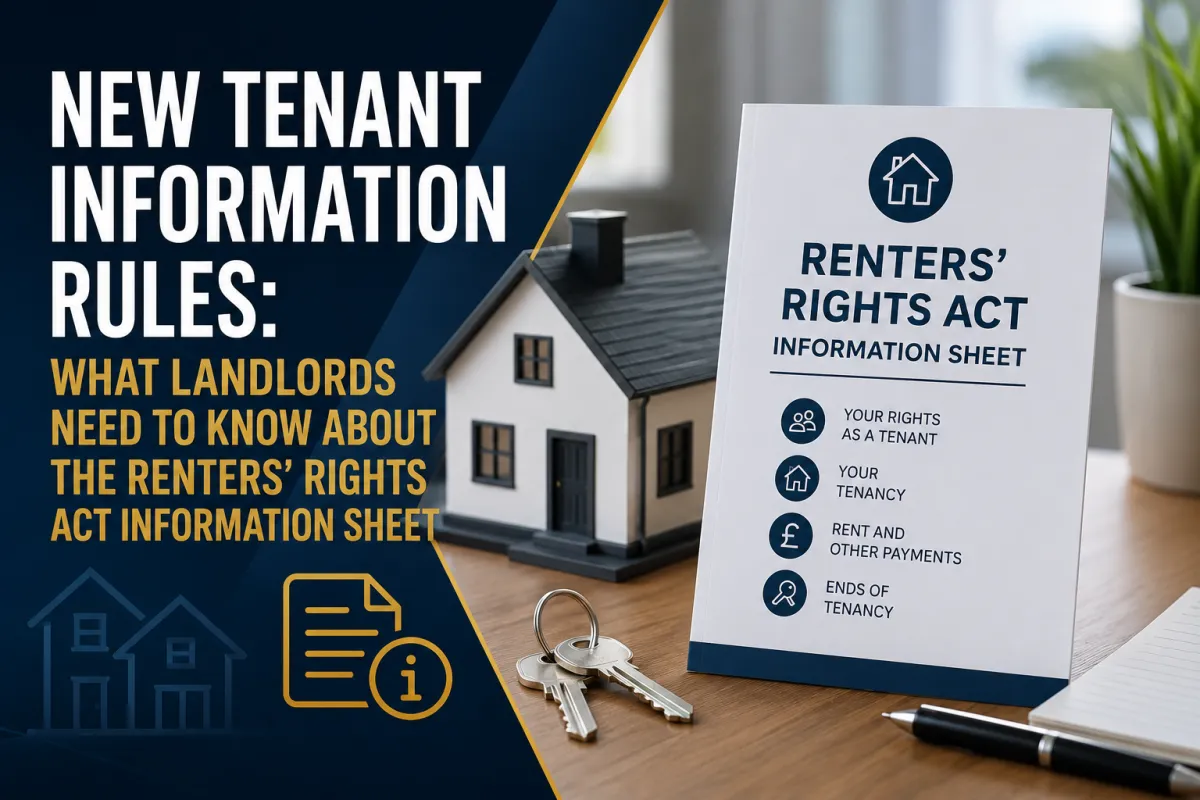
New Tenant Information Rules: What Landlords Need to Know About the Renters' Rights Act Information Sheet
Landlords and letting agents across England are facing new compliance requirements following the replacement of the long-standing "How to Rent" guide with the new Renters' Rights Act Information Sheet 2026.
The change forms part of the wider reforms introduced under the Renters' Rights Act and creates additional obligations for landlords regarding how information must be provided to tenants.
What Has Changed?
The Government has withdrawn the previous "How to Rent" guide and replaced it with the Renters' Rights Act Information Sheet 2026. The new document explains the updated tenancy framework introduced under the Renters' Rights Act, including changes to tenancy structures, rent increases, possession rules, and tenant rights.
Who Must Receive the Information Sheet?
From 1 May 2026, landlords must provide the Information Sheet to all new tenants at the start of their tenancy.
In addition, landlords with existing assured or assured shorthold tenancies that were in place before 1 May 2026 were required to provide the document to affected tenants by 31 May 2026.
How Must the Document Be Served?
The Government's guidance specifies that landlords and agents must provide the official document exactly as published.
The Information Sheet can be served as:
• A printed hard copy
• The official PDF attached directly to an email
• The official PDF attached directly to a text message
Importantly, simply sending a link to the document does not satisfy the requirement. Landlords are also advised not to alter, summarise, or recreate the document.
Potential Consequences of Non-Compliance
Failure to comply with the Information Sheet requirements may expose landlords to enforcement action and financial penalties.
Reports on the implementation of the Renters' Rights Act indicate that penalties for non-compliance can reach up to £7,000 in certain circumstances.
Why This Matters
The Information Sheet requirement highlights the growing importance of compliance within the private rented sector.
As rental regulations continue to evolve, landlords and letting agents may benefit from reviewing tenancy onboarding processes, record keeping systems, and compliance procedures to ensure all required documentation is provided correctly.
Good documentation practices can help reduce risk, improve transparency, and support compliance with current legislation.
Key Takeaway
The replacement of the "How to Rent" guide may appear to be a simple administrative change, but it introduces important compliance responsibilities for landlords and letting agents.
Understanding what must be provided, when it must be served, and how it should be delivered can help reduce the risk of enforcement action and ensure compliance with the latest requirements.
Need Support Navigating Regulatory Changes?
The UK rental sector continues to evolve, and staying compliant is becoming increasingly important for landlords, investors, and property professionals.
At SH Property Consultancy, we help property investors and landlords stay informed about market developments, regulatory changes, and property investment opportunities.
🌐 www.shpropertyconsultancy.co.uk
📞 079 4348 5748
References
Buy Association Group:
https://www.buyassociationgroup.com/en-gb/news/new-renters-rights-document-creates-fresh-compliance-deadline-for-landlords
GOV.UK:
https://www.gov.uk/government/publications/how-to-rent
⚠️ Disclaimer: This article is for general information only and should not be relied upon as legal, financial, or investment advice. Property investments carry risks, and tax rules remain subject to change. Please seek professional advice tailored to your circumstances.
